Showing posts with label propagation. Show all posts

Friday, April 21, 2017

CA Coastal Live Oak Cuttings, or Driving down the one o one


What is your favorite part of spring? For me, it's softwood cuttings. I am by no means a cuttings master,  but I have had my share of experience. I have made cuttings throughout the year regardless of the season and the ripeness of the branch. Most cuttings grew a few did not. The failure was not related to species. Usually, what happened os that I would prune a plant. Then I would try to root the cuttings. Most would make it but some would not. Yet, I would never have a 100 percent failure. I attribute this to the very mild climate.

I want to try California Live Oak softwood cuttings. I think that it will be successful. Here in southern California, we had lots of rain this winter. The Oaks have pushed out lots of new growth. I have access to many Live oaks so I can take a few cuttings from each and try my luck.


These branches are new and have not lignified. The branches are very flexible. The leaves have hardened though. I am going to take as much of the branch as possible. I am not going to cut any branch smaller than five inches.


For the planting medium, I am mixing vermiculite and perlite in a ratio of 1:1. I am using a taller pot so that I can bury the ends of the cuttings about three inches.


This is what the cuttings look like. It has too many leaves for it to survive. The leaves would cause all the cutting to lose too much moisture through perspiration.


I removed the growing tip and all of the leaves except for the top two. The top two just underneath where I cut the tip off.


Just before I put them in the pot I shaved an eighth of an inch from the bottom of the cutting. I did do it twice per cutting on opposite sites. Then I added rooting hormone and planted the cuttings and watered.

California coastal live oak softwood cutting


Even if they fail I'll be able to try in the winter one more time.

I am hoping for the best. I am trailblazing (That means I did not find any info on the web). Updates sure to follow. Cheers.

Update 05/01/2017:

it was a fail.


Friday, March 24, 2017

Juniper cuttings, we were cloning before we knew what cloning was

Have you ever pruned a tree and wish you could do something with the pieces that were cut off? Have you ever wished you can make a clone of a favorite tree? Well, People have been doing exactly that for over a thousand years.


This year I bought my first shimpaku juniper. I was very excited. It was late winter/ early spring (Los Angeles winter). I bought a few shimpaku for a great price. I pruned a couple of trees and I decided to save the cuttings and try to root them.


I have tons of experience rooting ficus. Heck, ficus roots almost by accident. There is no challenge in that. I have rooted rosemary, cotoneaster, and Japanese boxwood. That's the extent of my experience.

The following pictures are of a Hollywood juniper (Juniperus chinensis 'Torulosa'). These junipers grow tall and thick. The point of interest are the branches which grow like the conifers in Vincent Van Gogh’s Starry Night. However, I made shimpaku cuttings earlier that week.

I needed coarse sand. I have looked high and low for coarse sand. I even went to some mountain rivers to collect it. That sand turned out to be decomposed granite which is great but it takes a huge effort to collect. I found a bag of sand used in construction at a big box home improvement place. I sift out the fine sand and keep the large stuff. I think i paid $3.00 U.S. for a 50lb bag (22kg). I would say that about two-thirds of the bag is coarse sand.


sand after sifting
I mixed perlite with that sand. I need the soil to drain quickly and retain some of the moisture. I did not sift the perlite.


Then I mixed peat moss. The ratio was about 1:1:1.


one gallon pot
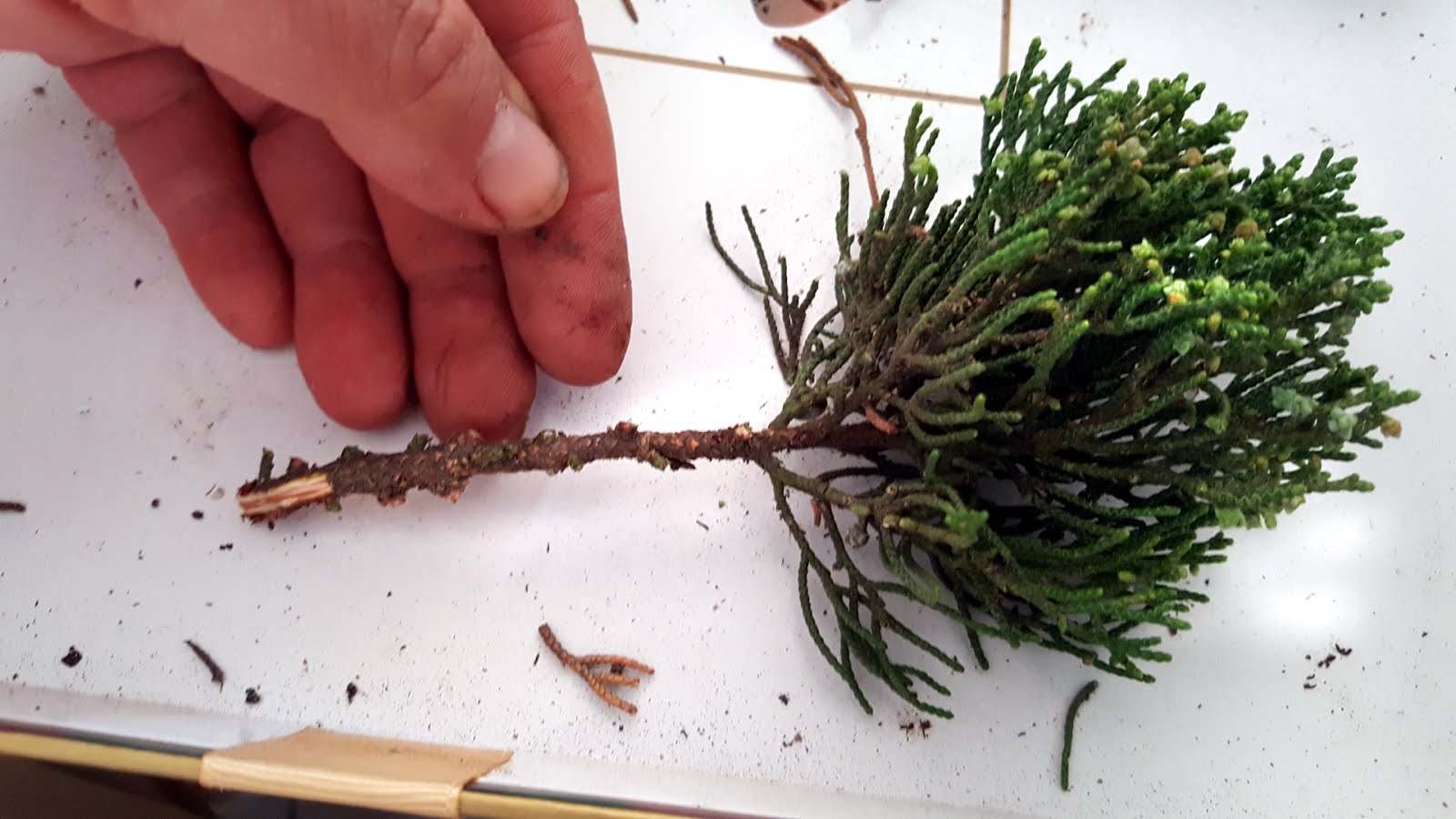
I grabbed the juniper branch that I collected. I chose some branches that were not too big or not to small.

hollywood juniper cloning

I trimmed all the needles and smaller branches that have been growing near or at the bottom third of the cutting. Then at the bottom, I scrape off a piece of the bark. See the light color tip near where I cut the branch off? I should have scraped twice that amount or even more.

hollywood juniper cutting


That is where the roots are going to grow. I added rooting hormone and placed the branches as far down as the lowest needle. Then I watered the pot trying to thoroughly soak the soil.


Left Hollywood juniper, right shimpaku


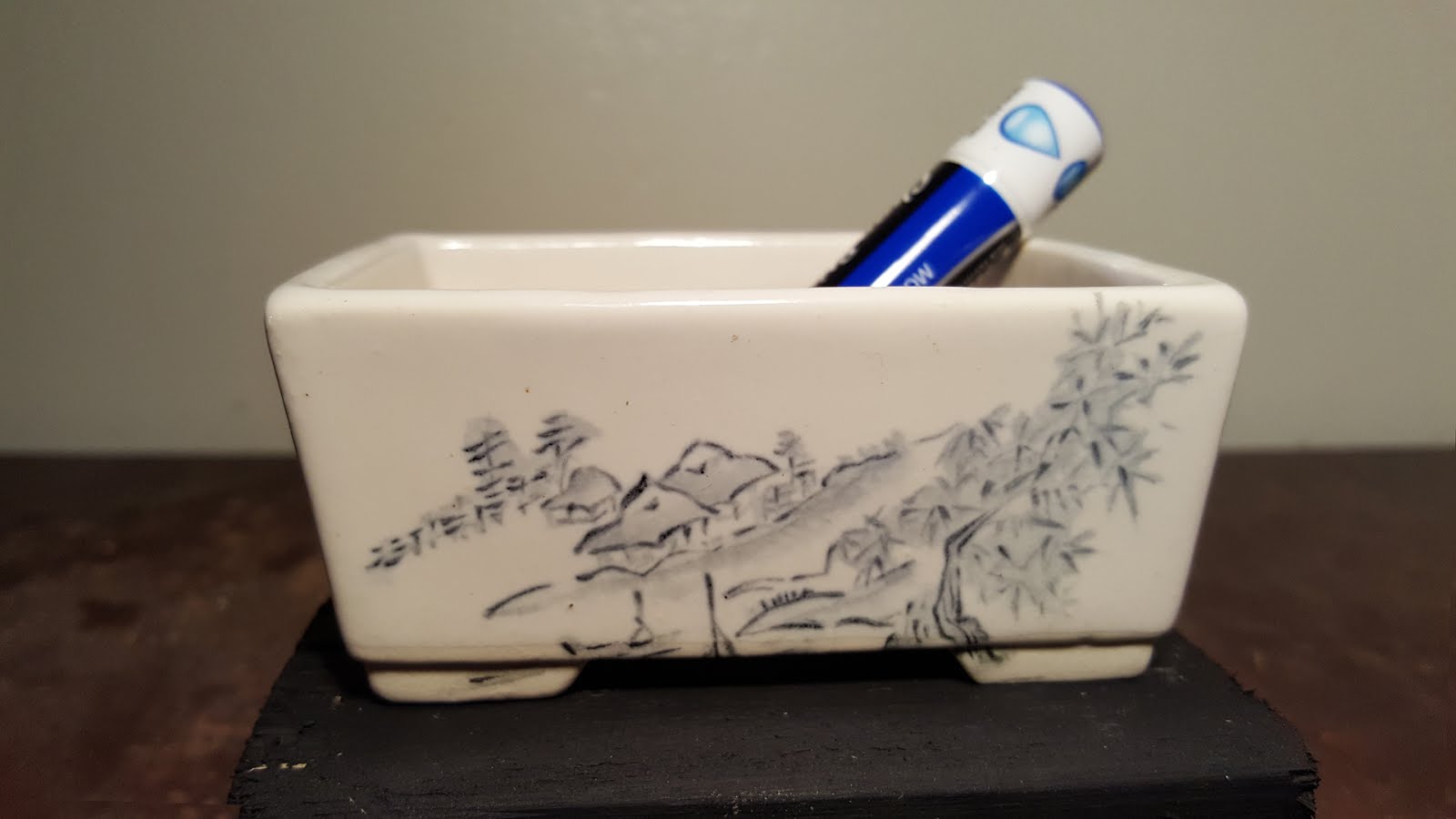
That is it. I hope they root because I already have plans for all these baby clones. No, I am not building a clone army. I buy bonsai pots that I like then I make bonsai for them. I have a set of three bonsai pots I think should be for conifers only.


Cheers.

Update 06/05/2016

It's been three months since I potted the juniper cuttings.


Many people are tempted to tug on the cuttings to see if they have rooted. This is not such a good idea. If you tug you may break the roots that have already grown. You just have to wait it out. If the cutting turns brown it has failed. New growth means that the cutting has taken.

New growth means new roots

I noticed that the thicker cuttings had more and longer roots.